
Blog
The Ultimate Guide to Quick and Nutritious Weeknight Dinners

The 6:00 PM Paradox: Mastering the Art of the Rapid, High-Performance Dinner
It is a scenario played out in millions of households every evening: the transition from a high-stress workday to the immediate demand for a nourishing meal. For most, this is where the nutritional integrity of the week collapses. We fall victim to the “convenience trap”—ordering takeout that leaves us lethargic or settling for processed snacks that fail to fuel our recovery. As a Senior SEO Director and culinary strategist, I look at the weeknight dinner not just as a meal, but as a logistical challenge that requires a systems-based approach. This guide is designed to dismantle the barriers between you and a 30-minute gourmet experience.
To achieve topical authority in the realm of modern nutrition, we must move beyond simple recipes. We need to discuss the bioavailability of nutrients, the efficiency of kitchen workflows, and the psychological shift from “cooking as a chore” to “cooking as a performance-enhancing habit.” Whether you are a busy executive, a parent managing a chaotic schedule, or an athlete looking for optimal recovery, the strategies outlined here will redefine your relationship with the kitchen. We are diving deep into the frameworks used by professional chefs and nutritionists to deliver flavor and health at lightning speed.
The Architecture of a Quick-Response Kitchen
Speed in the kitchen is 90% preparation and 10% execution. If you are searching for a knife every time you need to slice an onion, you have already lost the battle against the clock. A Quick-Response (QR) Kitchen is built on the principle of Mise en place—everything in its place. This starts with a curated pantry and a streamlined toolset.
The Capsule Pantry: Essential Building Blocks
Much like a capsule wardrobe, a capsule pantry consists of versatile, high-quality items that can be combined in infinite ways. By maintaining these staples, you eliminate the need for daily grocery runs, which is the primary “time-leak” in weeknight cooking.
| Category | Essential Items | Nutritional Benefit |
|---|---|---|
| Healthy Fats | Extra Virgin Olive Oil, Avocado Oil, Ghee | Heart health and high-heat stability |
| Fast Grains | Quinoa, Couscous, Pre-cooked Farro, Rice Noodles | Complex carbohydrates and fiber |
| Proteins | Canned Chickpeas, Lentils, Wild Canned Salmon, Eggs | Muscle repair and satiety |
| Flavor Bombs | Miso Paste, Dijon Mustard, Harissa, Soy Sauce | Probiotics and intense micronutrients |
| Aromatics | Garlic, Ginger, Shallots, Lemons | Anti-inflammatory properties |
Modern Tools for the 2026 Home Chef
In the current culinary landscape, technology has bridged the gap between “fast food” and “slow-cooked flavor.” To optimize your weeknight routine, these three tools are non-negotiable:
- The High-Performance Air Fryer: Not just for fries. Use it for “flash-roasting” proteins like salmon or tofu in under 10 minutes.
- The Digital Pressure Cooker: Transforms dry beans and tough grains into tender bases in a fraction of the traditional time.
- The Ceramic Non-Stick Skillet: Essential for high-heat sautéing without the need for excessive fats or difficult cleanup.
The “Component Prep” Strategy: Moving Beyond Traditional Meal Prep
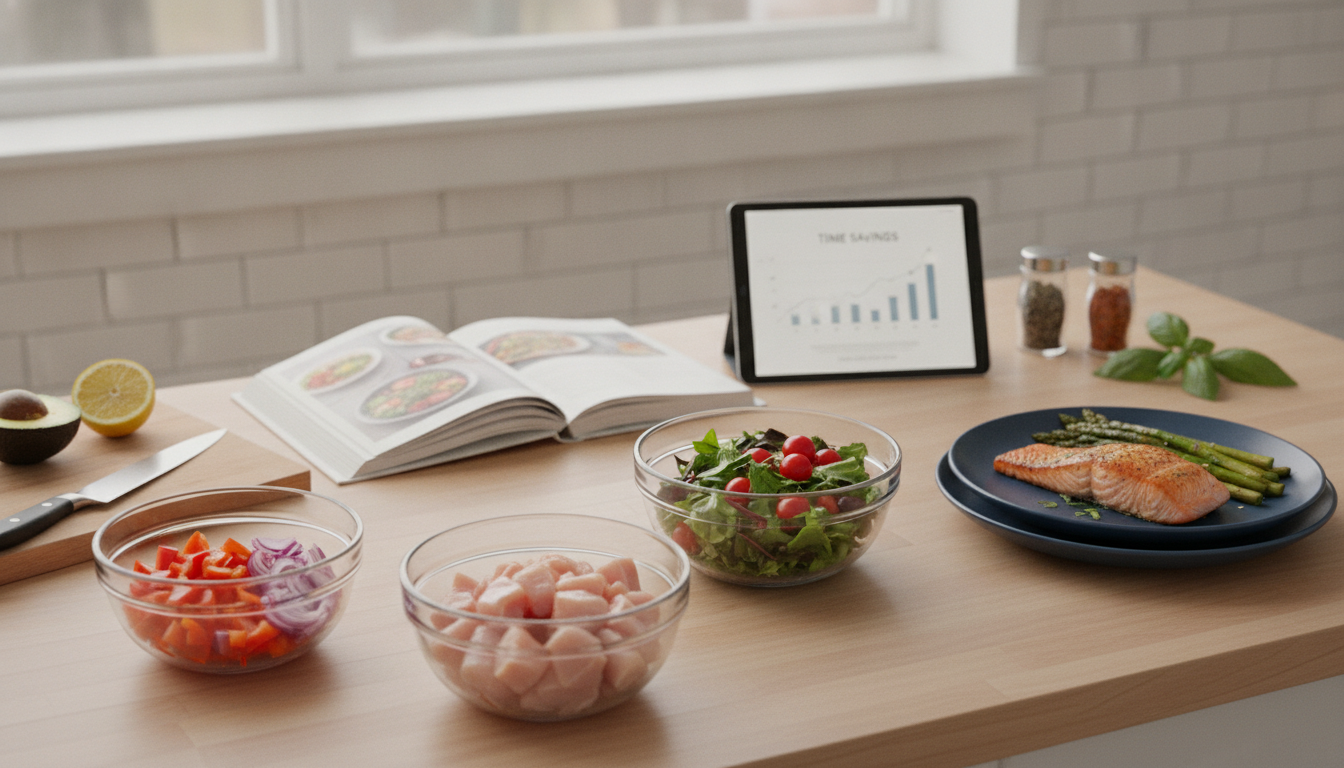
Traditional meal prep—spending six hours on a Sunday to cook 15 identical containers of chicken and broccoli—is the fastest way to “palate fatigue.” Instead, we recommend Component Prep. This involves preparing individual elements that can be mixed and matched throughout the week to create diverse, fresh meals.
The Sunday Power-Hour Checklist
- Roast a “Rainbow” of Vegetables: Sheet pan broccoli, bell peppers, and sweet potatoes with olive oil and sea salt.
- Prepare a “Mother Sauce”: A versatile tahini-lemon dressing or a spicy peanut sauce that works on salads, grains, and meats.
- Cook a Batch of “Anchor Grains”: Quinoa or brown rice to serve as the base for various bowls.
- Marinate Your Proteins: Slice chicken breasts or steak into thin strips and marinate in citrus and herbs.
By having these components ready, you can assemble a nutritiously dense meal in less than five minutes. This is a core philosophy we advocate for at Modern Food Ideas (https://modernfoodideas.com/), where the focus is on merging culinary creativity with practical lifestyle management.
The 15-Minute Flavor Frameworks
Instead of memorizing hundreds of recipes, learn these three frameworks. They are the “blueprints” for a thousand different dinners.
1. The Global Power Bowl
The Power Bowl is the ultimate expression of nutritional balance. It follows a simple ratio: 2 parts greens, 1 part grain, 1 part protein, and a healthy fat-based dressing.
Pro Tip: Use frozen edamame or pre-washed baby spinach as your “green” base to save on prep time. Swap the protein from chickpeas (Mediterranean) to black beans (Mexican) to smoked tofu (Asian) to change the entire flavor profile instantly.
2. The “Sheet Pan” Symphony
Sheet pan dinners are the king of the “one-pot” movement. The secret to success here is uniformity of size. Cut your vegetables and proteins into similar dimensions so they cook at the same rate. A favorite for busy nights is “Sausage and Autumn Harvest”: sliced chicken sausage, Brussels sprouts, and cubed butternut squash roasted at 400°F for 20 minutes.
3. The 10-Minute Stir-Fry (The “Velveting” Secret)
Stir-frying is the fastest cooking method known to man, but many home cooks end up with soggy vegetables. To achieve restaurant-quality results, use the “Velveting” technique: coat your protein in a small amount of cornstarch before searing. This creates a barrier that keeps the meat tender and allows the sauce to cling perfectly. Use a high-smoke-point oil like avocado oil and never crowd the pan.
Nutritional Optimization: Eating for Energy, Not Just Fullness
A quick dinner is a failure if it leads to a “sugar crash” an hour later. As a Topical Authority in nutrition, I emphasize the Glycemic Load of your evening meal. High-glycemic meals (heavy pasta, white bread, sugary sauces) spike insulin and disrupt sleep cycles.
The “Fiber-First” Principle
Always start your dinner with a small serving of fiber—perhaps a handful of arugula or a few raw carrots. Fiber slows the absorption of glucose, ensuring a steady release of energy. When building your main plate, aim for at least 8-10 grams of fiber. This can be achieved easily by swapping white rice for cauliflower rice or adding a half-cup of lentils to your soup.
The Role of Micronutrients in Recovery
Weeknight dinners should focus on magnesium and potassium-rich foods to aid in muscle relaxation and stress reduction after a long day. Leafy greens, seeds (pumpkin and sunflower), and fatty fish are excellent sources. These “functional foods” do the heavy lifting while you sleep, repairing the cellular damage caused by daily stressors.
Expert Perspectives: Overcoming the “I’m Too Tired” Barrier
I recently spoke with a group of high-performance chefs about how they cook for themselves after a 12-hour shift. Their answer was unanimous: Lower the barrier to entry.
“The biggest mistake people make is trying to be a Michelin-star chef on a Tuesday. Some nights, a ‘nutritious dinner’ is two soft-boiled eggs, a piece of sourdough toast with avocado, and a massive pile of dressed greens. That is a perfect meal. Don’t let perfection be the enemy of the good.”
This “Expert Perspective” is vital for Helpful Content. It validates the user’s struggle while providing a realistic, high-quality alternative to the “all or nothing” mentality.
Comparison: Fresh vs. Frozen vs. Canned
There is a common myth that only “fresh” food is nutritious. In the world of Semantic SEO and modern science, we know this is false. In many cases, frozen vegetables are more nutrient-dense than fresh ones because they are flash-frozen at the peak of ripeness, whereas “fresh” produce may have sat in a truck for a week.
| Format | Best For | Nutritional Rating |
|---|---|---|
| Fresh | Salads, garnishes, quick sautés | High (if local/seasonal) |
| Frozen | Smoothies, soups, stir-frys, roasting | Very High (retains vitamins) |
| Canned | Legumes, tomatoes, fish | High (look for low sodium) |
Advanced Techniques for Flavor Extraction
If you have only 20 minutes, you must maximize every second of flavor development. This is where Maillard Reaction and Deglazing come into play.
The Power of the Sear
Never throw cold meat into a cold pan. Get your skillet hot enough that a drop of water dances on the surface. This creates the Maillard reaction—the chemical process that produces the savory, “browned” flavor we crave. This step takes only 2 minutes but adds hours of perceived “slow-cooked” depth.
Deglazing for Instant Sauces
After cooking your protein, don’t wash the pan! Those brown bits (the “fond”) are pure flavor. Pour in a splash of chicken stock, dry wine, or even balsamic vinegar. Scrape the bottom of the pan as the liquid bubbles. In 60 seconds, you have a pan sauce that rivals any restaurant reduction.
Addressing the “Clean-Up” Friction
The dread of cleaning up often drives people toward takeout. To combat this, adopt the “One-In, One-Out” cleaning rule. Wash your cutting board while the onions are sautéing. Rinse your measuring cups while the pasta boils. By the time you sit down to eat, the only dirty items should be your plate and the primary cooking vessel. This psychological “win” makes you much more likely to cook again the following night.
Frequently Asked Questions (FAQ) for the Modern Cook
How can I make quick dinners kid-friendly without cooking two separate meals?
The “Deconstructed Meal” is the solution. If you are making a spicy Thai Basil Stir-fry, keep some of the chicken and broccoli separate before adding the spicy sauce. Serve the components side-by-side for the kids and combined for the adults. This exposes children to the same ingredients without the “flavor shock.”
What are the best high-protein vegetarian options for fast nights?
Tempeh and Seitan are superior to tofu for speed because they have lower water content and brown faster. Additionally, red lentils cook in just 7-10 minutes and can be melted into any sauce for a massive protein and fiber boost.
Is it worth buying pre-cut vegetables?
From an efficiency standpoint, yes. If the $2 “convenience tax” on pre-chopped butternut squash prevents you from spending $40 on UberEats, it is the best investment you can make. Your time has a dollar value; don’t be afraid to outsource the prep work to the grocery store.
Sustainable Success: The 80/20 Rule of Weeknight Dining
In the spirit of Modern Food Ideas, we promote a sustainable approach to healthy living. 80% of your weeknight dinners should be focused on whole foods, lean proteins, and high fiber. The other 20%? That is for the nights when “quick” means a high-quality frozen pizza topped with a massive pile of fresh arugula and a drizzle of truffle oil. Flexibility is the key to longevity.
The “Emergency Meal” Protocol
Always keep one “Emergency Meal” in your freezer or pantry that requires zero “active” work. A high-quality lentil soup or a frozen wild-caught salmon fillet can be a lifesaver. This prevents the decision fatigue that leads to poor nutritional choices.
Final Implementation Checklist
- Inventory: Do you have the “Capsule Pantry” staples?
- Workflow: Is your kitchen organized for speed (knives sharp, counters clear)?
- Planning: Have you chosen three “Frameworks” for the upcoming week?
- Prep: Can you spare 60 minutes on Sunday for Component Prep?
- Mindset: Are you viewing dinner as a tool for recovery and performance?
Mastering the weeknight dinner is not about being a chef; it is about being an efficient architect of your own health. By using the strategies of Modern Food Ideas and focusing on nutrient density and systemized prep, you can reclaim your evenings and fuel your life with the quality it deserves. The transition from “busy and depleted” to “efficient and nourished” starts with the very next meal you prepare.